Details

Order PLAXIS 3D

Available licences (more information):
first extra
Flexible € 24,000.00 € 16,000.00
Standalone € 18,000.00 € 12,000.00
VIP (annual fee) € 2,750.00 € 1,650.00
buy

Screenshots

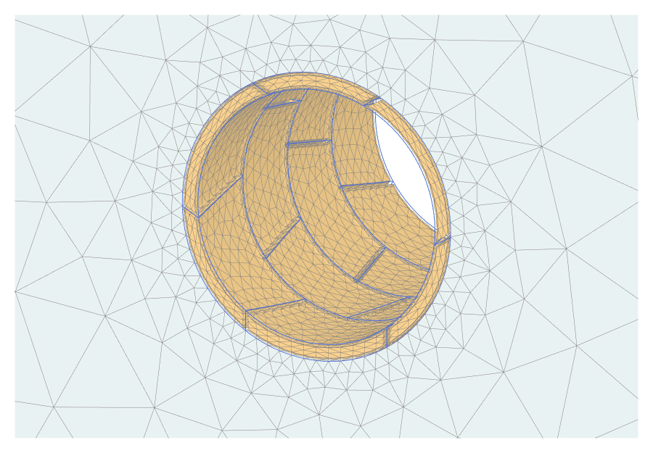
PLAXIS 3D - Twin Tunnels
PLAXIS 3D 3
PLAXIS 3D 3
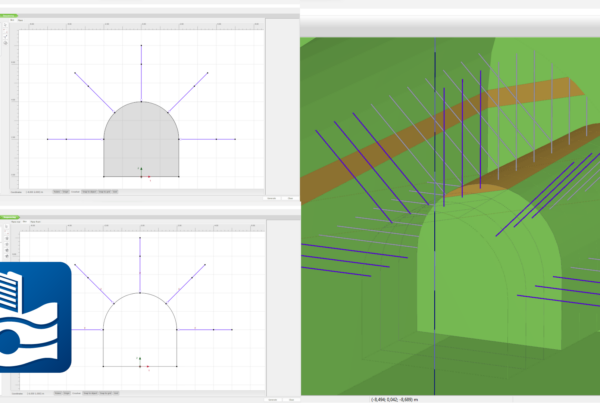
Rock bolts for a tunnel construction - Model
Rock bolts for a tunnel construction - results
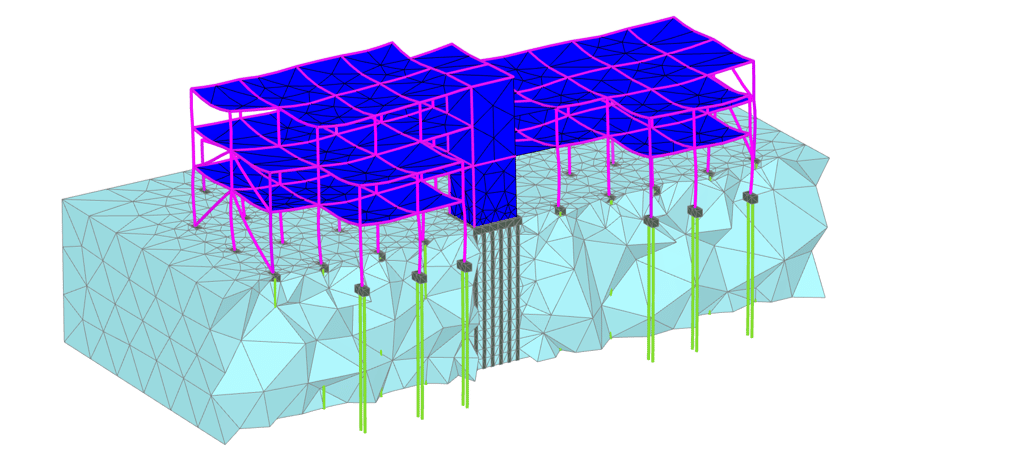
Two level subway station - Model
PLAXIS 3D - Subway Station 2 Levels
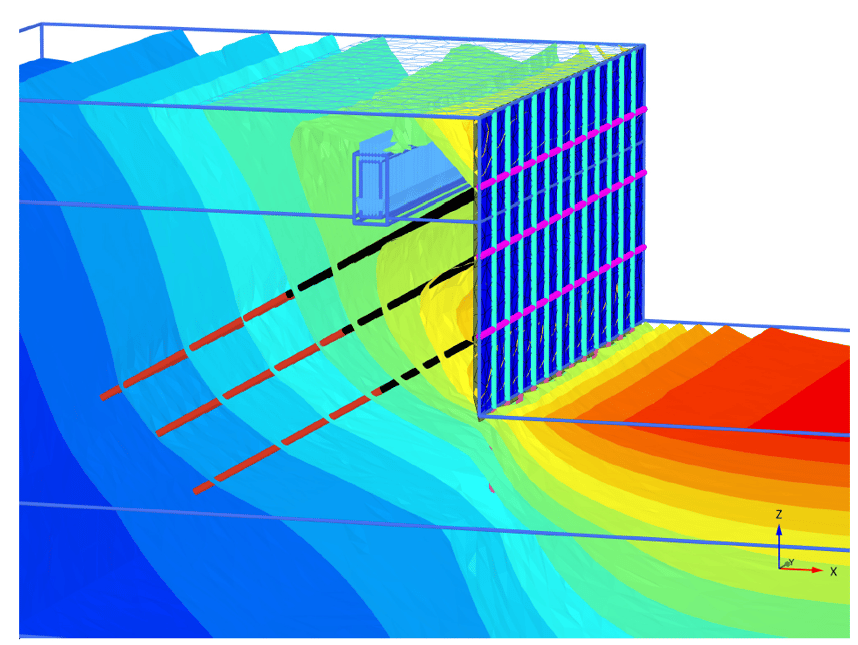
Dam in a valley, import of terrain
PLAXIS 3D - Dam in Valley

PLAXIS 3D

Product features

PLAXIS is equipped with features to deal with various aspects of complex geotechnical structures. A brief summary of the important features of the program is given below.

Graphical input of geometry models: The input of soil data, structures, construction stages, loads and boundary conditions is based on convenient CAD drawing procedures, which allows for a detailed modelling of the geometry cross-section (PLAXIS 2D) or major geometry (PLAXIS 3D). From this geometry model, a finite element mesh is easily generated.

Boreholes: Soil layers are defined by means of boreholes. Multiple boreholes can be placed in the geometry to define a non-horizontal soil stratigraphy or an inclined ground surface. PLAXIS automatically interpolates layer and ground surface positions in between the boreholes.

Automatic mesh generation: PLAXIS allows for automatic generation of unstructured finite element meshes with options for global and local mesh refinement. The mesh generator is based on the 2D and 3D mesh generators developed by Sepra.

High-order elements: Quadratic 6-node and 4th order 15-node triangular elements are available to model the deformations and stresses in the soil. Quadratic tetrahedral 10-node elements are available in PLAXIS 3D.

Interfaces: Joint elements are available to model soil-structure interaction. For example, these elements may be used to simulate the thin zone of intensely shearing material at the contact between a tunnel lining and the surrounding soil. Values of interface friction angle and adhesion are generally not the same as the friction angle and cohesion of the surrounding soil.

Plates: These special features can be used to model thin two-dimensional structures in the ground with a significant flexural rigidity (bending stiffness).

Beams: Beam elements can be used to model slender one-dimensional objects with a significant flexural rigidity. The stiffness of these elements is defined using linear elastic material orthotropy.

Anchors: Elastoplastic spring elements are used to model anchors and struts. The behaviour of these elements is defined using a normal stiffness and a maximum force. A special option exists for the analyses of prestressed ground anchors and excavation supports.

Geogrids: Geogrids (or geotextiles) are often used in practice for the construction of reinforced embankments or soil retaining structures. These elements can be simulated in PLAXIS by the use of special tension elements. It is often convenient to combine these elements with interfaces to model the interaction with the surrounding soil. The behaviour of these elements is defined using a normal stiffness and a maximum tension force.

Embedded piles: These special elements consist of beam elements with embedded interface elements to describe the interaction of the pile with the soil at the skin and the foot of the pile. The beam element is considered to be linear elastic and its behaviour is defined using elastic stiffness properties. The embedded interface elements are considered to be elasto-plastic. The failure behaviour of the embedded pile elements is defined by their bearing capacity.

Loads: The program allows for various types of loads (point loads, line loads and distributed loads) that could be applied in the model. Different loads and load levels can be activated independently in each construction stage.

Mohr-Coulomb model: This robust and simple non-linear model is based on soil parameters that are known in most practical situations. Not all non-linear features of soil behaviour are included in this model, however. The Mohr-Coulomb model may be used to compute realistic bearing capacities and collapse loads of footings, as well as other applications in which the failure behaviour of the soil plays a dominant role. It may also be used to calculate a safety factor using a 'phi-c reduction' approach.

Advanced soil models: As a general second-order model, an elastoplastic type of hyperbolic model is available, which is called the Hardening Soil model. This model allows for plastic compaction (cap hardening) as well as plastic shearing due to deviatoric loading (shear hardening). To account for the increased stiffness of soils at small strains, the Hardening Soil model with small-strain stiffness is available. To analyse accurately the time-dependent and logarithmic compression behaviour of normally consolidated soft soils, a Creep model is available, which is referred to as the Soft Soil Creep model. More detailed information on these models can be found in the Material Models Manual.

User-defined soil models: A special feature in this PLAXIS program is the userdefined soil models option. This feature enables users to include self-programmed soil models in the calculations. This option is primarily of interest for researchers and scientists at universities and research institutes, but it may also be useful for practising engineers. An overview of existing user-defined soil models is available on the PLAXIS website.

Soil tests: The soil test option in PLAXIS is a convenient procedure to check the behaviour of the selected soil material model with the given material parameters. After entering the model parameters, the user can quickly simulate several standard soil tests and compare the results against the results from actual laboratory tests. Orthotropic structural behaviour: Structural behaviour may be defined as linear elastic material orthotropy. This applies to beams, plates and geogrids. Geometric orthotropy of plates with a particular profile can also be emulated to a certain extend.

Steady state pore pressure: Complex pore pressure distributions may be generated on the basis of a combination of phreatic levels or direct input of water pressures. In PLAXIS 2D a steady-state groundwater flow calculation can be performed as an alternative to calculate the pore pressure distribution in problems that involve steady flow or seepage.

Excess pore pressures: PLAXIS distinguishes between drained and undrained soils to model permeable sands as well as almost impermeable clays. Excess pore pressures are computed during plastic calculations when undrained soil layers are subjected to loads. Undrained loading situations are often decisive for the stability of geotechnical structures.

Automatic load stepping: The PLAXIS program runs in an automatic step size and automatic time step selection mode. This avoids the need for users to select suitable load increments for non-linear calculations and it guarantees an efficient and robust calculation process.

Arc-length control: This feature enables accurate computations of collapse loads and failure mechanisms to be carried out. In conventional load-controlled calculations the iterative procedure breaks down as soon as the load is increased beyond the peak load. With arc-length control, however, the applied load is scaled down to capture the peak load and any residual loads.

Staged construction: This powerful PLAXIS feature enables a realistic simulation of construction and excavation processes by activating and deactivating clusters of elements, application of loads, changing of water pressure distributions, etc. This procedure allows for a realistic assessment of stresses and displacements as caused, for example, by soil excavation during an underground construction project.

Consolidation analysis: The decay of excess pore pressures with time can be computed using a consolidation analysis. A consolidation analysis requires the input of permeability coefficients in the various soil layers. Geometry boundaries can be set open or closed for consolidation. Automatic time stepping procedures make the analysis robust and easy-to-use.

Safety factors: The factor of safety is usually defined as the ratio of the failure load to the working load. This definition may be suitable for foundation structures, but not for sheet-pile walls or embankments. For this latter type of structure it is more appropriate to use the soil mechanics definition of a safety factor, which is the ratio of the available shear strength to the minimum shear strength needed for equilibrium. PLAXIS can be used to compute this factor of safety using a 'phi-c reduction' procedure.

Updated Lagrangian analysis: Using this option, the finite element mesh is continuously updated during the calculation. For some situations, a conventional small strain analysis may show a significant change of geometry. In these situations it is advisable to perform a more accurate Updated Lagrangian calculation, which is called Updated Mesh in PLAXIS.

Preview option: A convenient preview option is available to check model and calculation settings in a graphical 2D or 3D environment. Since calculations can be quite time consuming, it is important to check the model carefully before starting the calculation process.

Presentation of results: The PLAXIS postprocessor has enhanced graphical features for displaying computational results. Exact values of displacements, stresses, strains and structural forces can be obtained from the output tables. Plots and tables can be sent to output devices or to the Windows® clipboard to export them to other software. Stress paths: A special tool is available for drawing load- displacement curves, stress paths and stress-strain diagrams. Particularly the visualization of stress paths provides a valuable insight into local soil behaviour and enables a detailed analysis of the results of a PLAXIS calculation.

Plaxis bv | P.O. Box 572, 2600 AN Delft, The Netherlands | Tel: +31 (0)15 2517 720 Fax: +31 (0)15 2573 107 E-mail: info@plaxis.nl Privacy Policy | Terms and Conditions